What Deafblind Passengers Need Written Into West Yorkshire's Bus Franchise
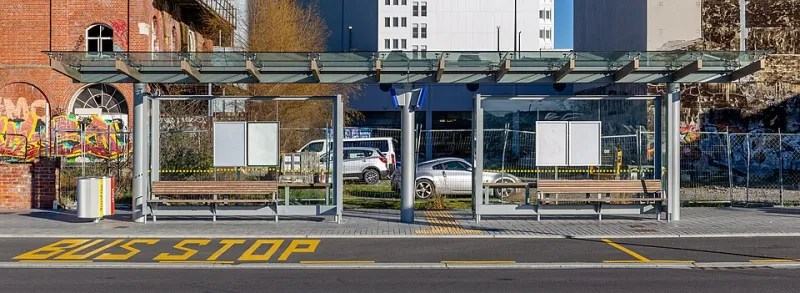
Photo: Michal Klajban, CC BY-SA 4.0, via Wikimedia Commons
For most passengers, the argument about bus franchising is a argument about routes, fares and reliability. For people with combined sight and hearing loss, it is an argument about whether they can get on the bus at all, know where it is going, and get off at the right stop without relying on a stranger.
West Yorkshire is several years into a programme of bus reform led by the Mayor and the West Yorkshire Combined Authority, and the region is moving towards a franchised network in which the authority, rather than individual operators, decides the shape of services and the standards attached to them. That shift matters enormously, because accessibility under franchising is not a matter of goodwill. It is a matter of what is written into the contract and what happens when a clause is not met.
How franchising differs from the present system
Outside London, bus services have been largely deregulated since the mid-1980s. Commercial operators decide which routes to run, how often, what vehicles to use and, within limits, what to charge. Local authorities can influence standards through partnership arrangements and can fund socially necessary services, but they cannot simply instruct an operator to fit a particular information system.
Under a franchise, the Combined Authority specifies the network, sets fares and service standards, and awards contracts to operators who must deliver to that specification. In principle this gives the authority direct leverage over vehicle specification, driver training, information provision and enforcement. In practice, leverage exists only where a requirement is explicit, funded and monitored.
One statutory floor already exists. The Public Service Vehicles Accessibility Regulations require many buses to provide audible and visual information about the route and the next stop, along with other accessibility features. In our experience, and in the experience of readers who contact us, compliance is inconsistent: screens that are blank, audio that is muted or drowned out, and announcements that stop working partway through a journey with no remedy available to the passenger at the roadside.
What has been said about accessibility so far
The Combined Authority's consultation material and public statements have set out an accessibility ambition that includes audio-visual next-stop announcements, improved driver training, clearer assistance policies, accessible passenger information and ongoing engagement with disabled people and their organisations. These are welcome commitments and, on paper, they address the right issues.
The question is one of specification. A commitment to driver training means little without an agreed curriculum, a record of completion and a mechanism for passengers to report when the training has evidently not translated into practice. A commitment to accessible information means little if the app fails a screen reader or if a real-time display at a stop has no audible equivalent.
There is also the question of what happens at the boundary. Franchising covers bus services; it does not, by itself, staff a bus station, fix a broken help point or guarantee that a railway station interchange has someone available to assist. Deafblind journeys are usually multi-leg, and a seamless bus network can still fail at the point where a passenger must cross a concourse alone.
Where the gaps are most likely to open
Four areas concern us most.
First, equipment reliability. Announcements and displays that work at launch but degrade over a contract term. Without a fault-reporting route and a service-level remedy, passengers bear the cost of failure.
Second, driver practice. Assistance is inconsistent. Some drivers are excellent: they speak clearly, face the passenger, offer an arm rather than grabbing a bag, and confirm the stop. Others assume that a passenger who does not respond has ignored them. Training must address deafblindness specifically, not disability in general.
Third, hail-and-ride and stop design. Where passengers must attract a driver's attention, a deafblind person may be invisible or inaudible. Clear stopping arrangements, tactile and high-contrast stop markers, and consistent behaviour from drivers are essential.
Fourth, ticketing and enforcement. Contactless-first systems, app-only fares and revenue protection teams all create risk for passengers who cannot see a screen, hear an inspector or produce a phone on demand. Being challenged as a fare evader because you did not hear someone speak is a humiliating and entirely avoidable experience.
What we are asking for
We are calling on the Mayor's office and prospective operators to build the following into franchise specifications and contracts.
- Audio-visual next-stop information as a contractual baseline, with working equipment treated as a condition of contract rather than an optional extra, and a published remedy when it fails.
- A defined deafblindness module in driver training, with an auditable record of completion, refresher training within the contract term, and a straightforward way for passengers to report poor practice.
- A written assistance policy covering boarding, alighting, seat allocation and communication, displayed on vehicles and published online in accessible formats.
- Accessible real-time information, including audible provision at key stops and interchanges and digital services that meet recognised accessibility standards and are tested by disabled users before launch.
- Staffed assistance at major interchanges, including Leeds City Bus Station, during operating hours, with help points that work and are reachable without sight or hearing.
- A fares and ticketing guarantee: at least one route to purchase and validate a ticket that does not require a smartphone, a screen or the ability to hear a member of staff.
- Clear recognition of concessionary entitlements, including the companion pass arrangement that allows a disabled person's pass holder who needs support to travel with someone at no additional fare.
- A disability-led scrutiny panel with deafblind representation, published performance indicators on accessibility faults, and an annual report to the Combined Authority.
None of these asks is novel. Most are already standard practice somewhere in the British bus network. What is new is the opportunity to make them mandatory rather than aspirational.
How to make your experience count
Franchising decisions are made through statutory processes that include formal consultation, and responses from disabled passengers carry weight, particularly when they are specific. If a journey has failed you, describe it plainly: the route, the stop, the time, what the driver did, what the information system did or did not do, and what you had to do instead.
Send your experiences to the Combined Authority's bus reform team, raise them with your councillor, and copy them to local disability and sensory organisations so that patterns become visible. Transport Focus, the statutory passenger watchdog, also collects evidence about bus services. Each individual account may feel small. Collected together, they are the evidence base that determines what gets written into a contract — and what deafblind passengers in West Yorkshire can expect for the next decade.