After the Quiet Hour: What Deafblind Shoppers Still Need in Leeds Stores

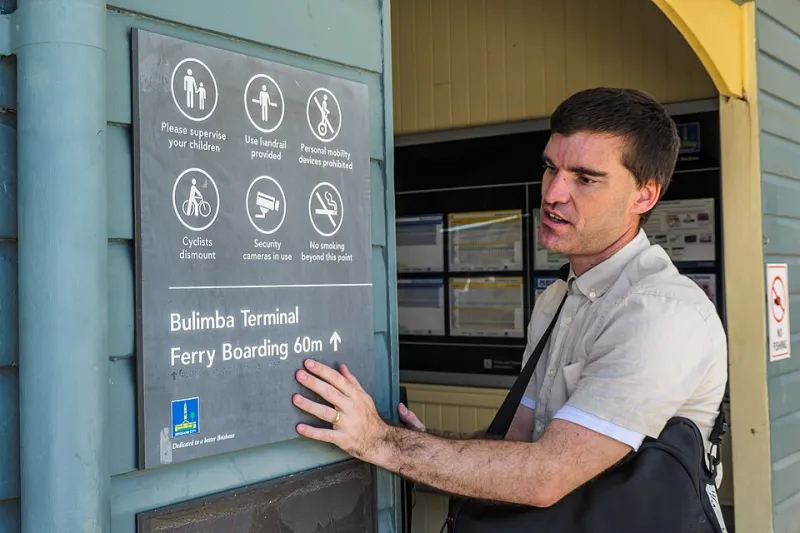
Photo: deafblind shopper tactile signage supermarket UK accessibility, via facts.net
Quiet hours have become a familiar feature of UK supermarkets. For some deafblind shoppers, a designated hour with reduced music and checkout noise can make a real difference. Yet a quiet hour, on its own, does not make a store accessible. It addresses one sensory channel and leaves many others unchanged. In Leeds, where supermarkets are not merely places to buy food but essential parts of daily life, that gap matters.
This article is not a league table of named stores. It is an audit framework based on the barriers deafblind shoppers report, and a practical guide for anyone who wants to test a local supermarket. It is also a set of recommendations for managers who want to move beyond a well-meaning gesture.
Why quiet hours only solve part of the problem
Deafblindness is a spectrum. Some people have low vision and hearing loss; others are profoundly deaf and blind. Many use residual senses, hearing aids, cochlear implants, canes, guide dogs, tactile sign, braille, large print, or a combination of methods. A quiet hour assumes the main barrier is sound. For a shopper with restricted vision, glare from ceiling lights, low-contrast shelf edges, reflections on polished floors and moving displays can be more disabling than background music. For a shopper who cannot hear staff, the absence of a clear communication routine is the bigger issue.
Quiet hour also often occurs at fixed times. Shift workers, carers, parents and people who rely on assisted transport cannot always attend. Accessibility should be built into the whole week, not confined to one advertised slot.
Lighting and visual access
Lighting is the first thing an audit should test. Supermarkets favour bright, even lighting for product display, but for people with low vision it can create glare, wash out contrast and make a store feel like a hall of mirrors. Audits should check whether ceiling lights are shielded or create direct glare in main aisles; whether floor surfaces are matte rather than highly reflective; whether shelf-edge labels use large, high-contrast text; whether promotional displays use flashing or moving digital screens that distract or cause discomfort; and whether there are consistent contrast strips on steps, columns and glass doors.
Managers can improve this without a full refit. Reposition displays, use non-reflective floor treatments in key areas, add contrast markings, and switch off unnecessary digital signage during designated access times.
Layout and wayfinding
Deafblind shoppers need predictable routes. A store that moves aisles for seasonal promotions may be visually interesting to some customers, but it removes the landmarks a person with restricted vision has learned. Audits should ask whether the entrance route is clear and free of temporary bins, trolleys and queue barriers; whether main aisles are wide enough for a guide dog, cane or support worker; whether there is a tactile map or a simple, large-print store guide at the entrance; whether assistance points are fixed and easy to find; and whether seating is available at intervals.
Wayfinding should not rely on a single sense. Large-print signs help some; tactile symbols help others; staff direction helps many. The strongest approach combines all three and keeps them consistent.
Tactile signage and labelling
Tactile signage is often misunderstood. A braille label on a door is useful only if the person reads braille and can find the label. A tactile symbol or raised map may be more useful in a busy entrance. In supermarkets, tactile information is most valuable for orientation: the location of customer services, toilets, checkouts and exits. Product-level braille is less common and often impractical, but shelf-edge information can still be made more accessible through large print, clear contrast and staff support.
Any tactile signage must be maintained. A raised sign that has been painted over, or a tactile map hidden behind a promotional stand, is worse than none because it erodes trust.
Communication at the till and on the shop floor
Staff communication is the most variable factor. Deafblind shoppers report that some staff are patient and inventive, while others speak louder and faster, or disappear to find a manager without explaining what is happening. Training should cover how to get a deafblind person’s attention without grabbing them; how to offer guiding safely; how to use clear speech, writing and simple gestures; how to use a communication card or app if the shopper has one; and when to call a colleague who has more confidence or signing skills.
Sunflower lanyards and similar schemes can signal a hidden disability, but they are not a substitute for training. A lanyard cannot explain a layout or guide someone to the till.
A checklist for any Leeds store
Shoppers and managers can use the following checklist in any supermarket. It is deliberately practical.
- Entrance: clear route, contrast markings on glass, tactile or large-print guide.
- Lighting: no direct glare, matte floors, no flashing screens.
- Layout: predictable aisles, wide routes, fixed assistance point, seating.
- Signage: high contrast, large print, tactile orientation, maintained.
- Staff: trained in deafblind awareness and guiding; know how to contact support.
- Checkout: clear queue system, option to wait in a quieter area, staff explain steps.
- Quiet hour: advertised accurately, includes lighting and screens, not just music.
- Feedback: accessible way to report problems and receive a response.
- Online and phone: accessible website and alternative contact methods.
Each item can be scored red, amber or green. A store that scores green on quiet hours but red on layout and communication is not yet accessible.
What managers can do next
Managers who want to move beyond quiet hours can take five steps this year. First, walk the store with deafblind residents and ask them to identify barriers. Second, train frontline staff in deafblind awareness, guiding and communication, with refresher sessions rather than a one-off briefing. Third, publish an access statement that describes the store honestly, including lighting, layout, quiet times and assistance available. Fourth, fix the physical environment where possible: contrast markings, clearer routes, maintained tactile information and a quieter checkout option. Fifth, review the store regularly with deafblind customers and report what has changed.
A standard worth meeting
Quiet hours are a useful starting point, not a finish line. In Leeds, deafblind shoppers deserve supermarkets that are legible, predictable and staffed by people who know how to help. The standard is not perfection; it is a consistent, honest effort to remove barriers across the whole shopping experience.