Ramps Are Not the Whole Story: A Deafblind Accessibility Pledge for Leeds
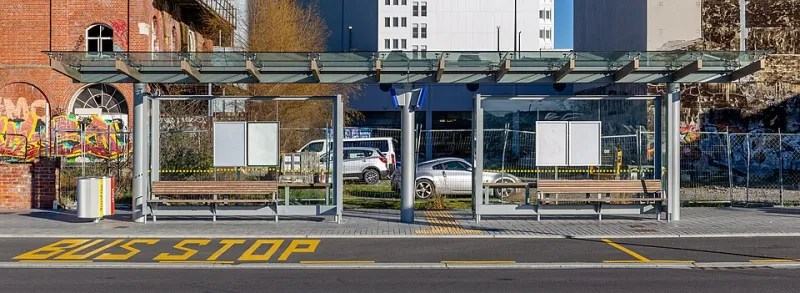
Photo: John Robert McPherson, CC0, via Wikimedia Commons
Accessibility in Leeds has a familiar visual language: the ramp, the wide doorway, the lift button at the right height. These matter. They are not, however, the whole story. A venue can be step-free and still be difficult or impossible for a deafblind person to use. If the city’s accessibility conversation stops at wheelchair access, deafblind residents remain invisible.
This is an opinion piece, but it is not a complaint for its own sake. It is a manifesto for a broader standard, and an invitation to venues, businesses and the council to sign a local pledge.
The gap between step-free and deafblind-friendly
Consider a typical Leeds venue: a museum, a health centre, a café, a transport interchange. The entrance may have a ramp and automatic doors. Inside, the lighting may be a wall of glare; the reception desk may be unmarked; the staff may have no training in deafblind communication; the lift may have a visual display but no tactile buttons; the fire alarm may be audible only. A wheelchair user can enter. A deafblind person may enter and then be stuck.
These are not niche problems. Deafblindness affects people of all ages and backgrounds, and the solutions are often low-cost: contrast markings, tactile maps, staff confidence, quiet spaces and clear communication. What is missing is not always money. It is priority.
Why Leeds should lead
Leeds is a growing city with a strong civic identity and a dense network of public services. The city centre, markets, hospitals, universities, cultural venues and public transport all shape daily life. As regeneration continues, there is an opportunity to design access in from the start rather than retrofit it later. The Leeds Deafblind Hub believes the city can set a standard for the rest of West Yorkshire.
Five commitments for any organisation
Below are five commitments we believe any venue, council service or business in Leeds can make. They are deliberately concrete. Each can be audited, published and reviewed.
1. Publish a deafblind access statement
Not a generic accessible venue claim. A short, specific statement covering lighting, acoustics, quiet times, tactile wayfinding, assistance available and how to request a guided visit. Publish it online and in large print, and keep it current.
2. Provide tactile and high-contrast wayfinding
From the entrance to reception, toilets, lifts and key services. Tactile maps and signs should be at a readable height and maintained. Contrast strips should mark glass doors, steps and columns. Wayfinding should not depend on hearing an announcement or seeing a distant sign.
3. Train frontline staff in deafblind communication and guiding
Staff should know how to get attention respectfully, offer an arm, use clear speech, write information down, and access a colleague with more signing or deafblind skills. Training should be refresher-based, not a one-off. Each site should have a named access champion.
4. Design for sensory access
Lighting should be adjustable or shielded where possible. Avoid flashing screens and unnecessary background noise. Provide a quiet space or a quieter time. Review layouts for predictable routes. These measures help many people, not only deafblind people.
5. Co-produce access with deafblind residents
Consultation after a decision is not co-production. Include deafblind people in design reviews, walkthroughs and feedback. Pay them for their time. Publish what you changed and what you could not change, with reasons.
A pledge Leeds can sign
We invite organisations to adopt the following pledge: ‘We recognise that accessibility is not only physical. We will publish a deafblind access statement, provide tactile and high-contrast wayfinding, train frontline staff, design for sensory access, and co-produce improvements with deafblind residents. We will review this annually and report on progress.’
Readers who want to support the pledge can register their interest through Leeds Deafblind Hub. We will publish a list of supporters and ask them to report on progress, not just sign a statement.
What the council and city partners can do
Leeds City Council and its partners can embed these commitments in procurement, licensing and public realm projects. New developments and refurbishments should be assessed for deafblind access before opening. Public transport interchanges should include tactile routes and staff assistance. Cultural venues should advertise quiet times and sensory information. Business improvement districts can offer training to members.
Accountability matters more than language
The word inclusive is used widely in Leeds. It should mean more than a ramp and a wide doorway. It should mean that a deafblind person can find the entrance, understand the layout, communicate with staff and leave with confidence. If a pledge is signed and forgotten, it is just another sticker. If it is audited and published, it can change practice.
A city that includes deafblind residents
Leeds has the opportunity to make accessibility a lived reality rather than a checklist of physical features. The five commitments above are not exhaustive, but they are a starting point. We invite venues, businesses and public services to sign the pledge, and we invite deafblind residents to hold us all to it.