Hands-On Heritage: The Case for Bookable Deafblind Access Across Leeds Museums
Leeds has a strong cultural offer, and its museums and heritage venues have made real progress in recognising that access is not a single ramp or a label at the door. For deafblind visitors, however, the quality of a museum visit often depends on whether touch, description and communication have been planned together. The city has examples of good practice. It does not yet have a consistent, citywide promise that a deafblind visitor can book the access they need and expect it to be delivered.
Where Leeds gets it right
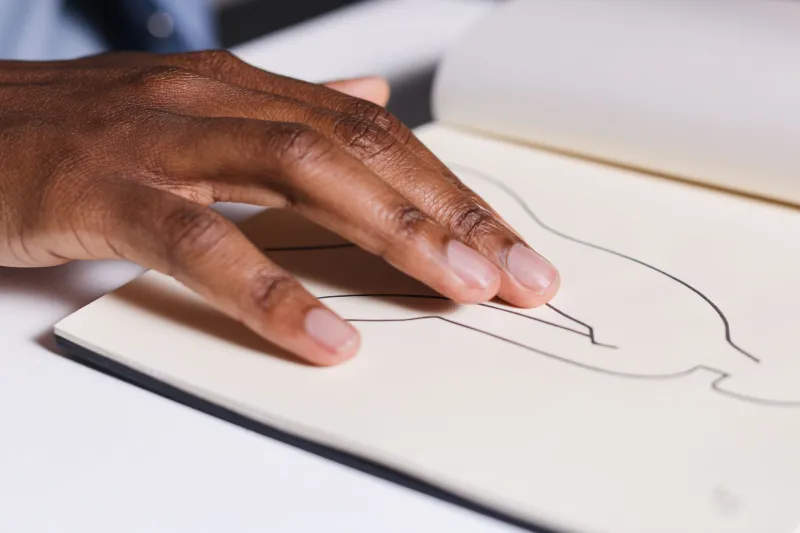
Venues such as Leeds City Museum, Leeds Art Gallery, the Thackray Museum of Medicine, Abbey House Museum, Kirkstall Abbey, Temple Newsam and the Royal Armouries have all, in different ways, shown that heritage can be experienced through more than sight. Tactile tours and handling sessions allow objects and materials to be explored by hand. Touch tables give visitors a chance to compare weight, texture and shape. Sensory backpacks, where they are available, can support a visit by providing small handling items, visual aids and quiet activities. Staff at their best do more than unlock a case: they describe an object in plain language, offer a hand under a hand, repeat information without impatience, and check that the visitor has understood.
That matters because deafblind access is not simply about making an object touchable. It is about the whole sequence of the visit: finding the entrance, knowing where to sit, understanding what is about to happen, and being able to ask questions in a preferred communication method. Good museum staff already understand this. They ask before guiding, they explain changes to the route, and they do not assume that a person with sight and hearing loss is visiting only as a passenger in someone else's day out.
What still stops at the display case
The problem is inconsistency. A tactile tour may be excellent at one venue and unavailable at another. A handling collection may exist but not be advertised. A booking may depend on a particular curator being on duty. A website may mention accessibility in general terms but give no clear route to request a deafblind-specific visit. For a deafblind person, that uncertainty is not a minor inconvenience. It can mean choosing between a visit that is likely to work and one that is not worth the effort.
Several gaps recur. Access information is often buried, published only in standard print, or written for people who can see and hear the screen. Booking systems may be phone-first or may not accept relay calls comfortably. Touch opportunities can be tied to family events rather than offered as a booked service. Front-of-house training varies. There may be no easy way to request a guide communicator, a quiet slot, or a description of the route in advance. And when something changes on the day, there is no simple way for a deafblind visitor to receive an update in the right format.
These are not arguments for blaming individual venues. They are arguments for a standard. Cultural organisations in Leeds should be able to say, clearly and publicly, what a deafblind visitor can book, how far in advance, what communication support is available, and who will answer questions. That is a modest ask, but it would transform the experience of planning a visit.
Practical steps for a museum visit
Deafblind visitors and companions can make a visit more reliable by being specific at the booking stage. Ask for a tactile tour or handling session, and ask which objects can be touched. State your communication preference: hands-on BSL, deafblind manual, clear speech, large print, braille, or written notes. Ask whether a guide communicator can be booked and whether there is a quiet time to visit. Request the access information and a simple route description in advance. Confirm the meeting point, the name of the staff member who will meet you, and what will happen if the tour cannot go ahead. If email is easier than the phone, use it and ask for a written reply. Keep the confirmation.
It is also reasonable to ask what a venue means by accessible. A touch table is not the same as a tactile tour. A large-print label is not the same as a description. A quiet hour is not the same as a booked deafblind session. Venues should be able to explain the difference without defensiveness.
What should change in 2026
Leeds needs a consistent, bookable deafblind access offer across its cultural sites. That should include a named access contact, a published statement of what can be touched and how, trained front-of-house staff, accessible booking and information in a range of formats, and a straightforward way to request communication support. It should also include a feedback route, so that deafblind visitors can report what worked and what did not.
The city's museums already have the raw materials: objects, stories, spaces and staff who care. What is missing is the guarantee. A deafblind visitor should not have to hope that the right person is in on the right day. They should be able to book, arrive, and explore with confidence. That is what a culturally accessible Leeds should mean in 2026.