A Sense of Place: Making Leeds Parks Genuinely Welcoming for Deafblind Visitors
Leeds is fortunate to have green spaces that reward more than a glance. Roundhay Park offers scale, water and woodland; Kirkstall Abbey brings stone, river and history into close contact; Golden Acre Park provides quieter paths and gardens. For deafblind visitors, these places can be rich with texture, temperature, scent and air movement. Yet access is still too often framed around the needs of wheelchair users, with little thought given to how someone who cannot see clearly and cannot hear clearly will find their way, understand what is around them, or ask for help.
Access begins before the gate
Deafblind access does not start at the park entrance. It starts on a website, in a phone call, or in a conversation with a support worker. A visitor needs to know which entrance has a staffed point; whether paths are firm and level; where seating and shelter are; how far it is between landmarks; and whether there are quieter times. That information should be available in large print, braille and an accessible digital format, not buried in a PDF that screen readers cannot handle. For people with residual hearing, a clear phone route matters; for others, email or text-based contact is essential. Leeds City Council and park partners should publish a deafblind access statement for each major site, reviewed annually.
Tactile maps and sensory trails
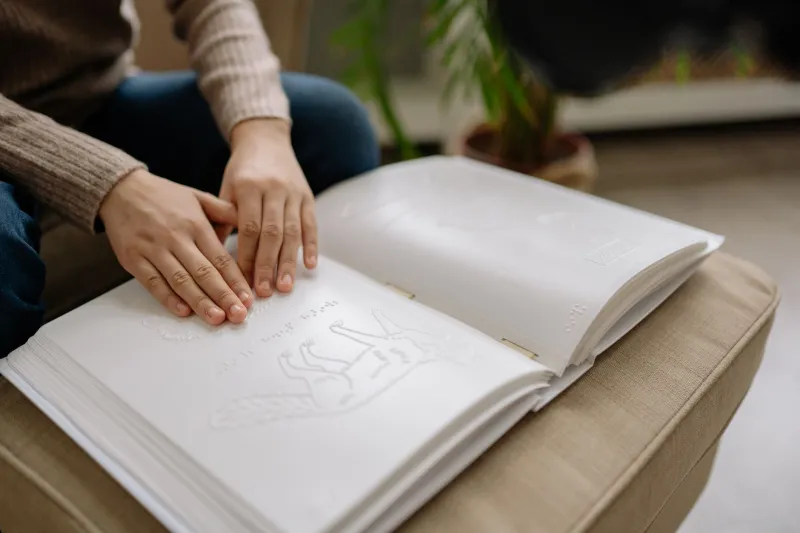
Tactile maps are useful only when they are accurate, robust and placed where they can be found. A map at the main entrance is a start, but it should use raised lines, distinct textures and simple braille or raised lettering. It should show the route to the nearest café, toilet, staff point and public transport, with a 'you are here' marker that is easy to locate by touch. At Roundhay, a tactile map could highlight the main lake path and the quieter woodland edge. At Kirkstall Abbey, it could explain the relationship between the visitor centre, ruins and river. At Golden Acre, it could mark the garden loops and seating. Sensory trails should be maintained as carefully as any other asset: loose labels, faded contrasts and missing braille are not minor defects; they are barriers.
Communication on site
Deafblind visitors use many communication methods, including deafblind manual, clear speech with residual hearing, BSL or tactile signing, and written notes. Staff do not need to be fluent in every method, but they should know how to establish contact calmly, offer a seat, adjust lighting and arrange a communicator guide or interpreter when requested. Support-worker arrangements should be clear and consistent. Essential companion policies should be published, not negotiated at the gate. A named contact for access bookings would help visitors plan with confidence, especially for group visits or events. Training should include practical scenarios: a visitor who cannot hear an alarm; a person who needs to touch a model before understanding a space; a visitor who becomes disoriented in a crowded event.
What Leeds should commit to in 2026
For 2026, Leeds should move from goodwill to a measurable commitment. The city should commission a deafblind access audit of its most visited parks, starting with Roundhay, Kirkstall Abbey and Golden Acre. It should pilot tactile maps and sensory route guides at those sites, train front-of-house staff in basic deafblind awareness, and publish clear access information in multiple formats. It should also commit to consulting deafblind residents and organisations before designs are signed off, not after installation. This is not an unrealistic wish list. It is the difference between a park that is technically open and one that is genuinely welcoming.
First-person tips from a regular visitor
One deafblind visitor who regularly walks at Golden Acre offers practical advice. Plan the meeting point before arrival, ideally at a staffed entrance or a distinctive tactile landmark. Ask for a route description in large print and, where possible, a short tactile map. Visit at a quieter time if crowds make communication difficult. Carry a mobile phone with a vibration alert and a text-based contact for the park. If you use a support worker, confirm whether they can enter for free and whether the route includes steps, gates or uneven ground. Ask staff to speak directly to you, not only to your companion.
A checklist for park managers
- Provide a deafblind access statement for each site, in large print, braille and accessible web format.
- Install and maintain tactile maps at main entrances, with raised lettering, braille and clear 'you are here' markers.
- Design sensory trails with durable textures, contrast, seating and regular maintenance checks.
- Publish essential companion and support-worker policies, including free entry where applicable.
- Train staff in deafblind awareness, calm contact, written communication and booking procedures.
- Offer a named access contact and clear meeting points for booked visits.
- Review lighting, path edges, handrails and quiet routes, not only step-free access.
- Consult deafblind residents and organisations at design and review stages.
- Promote quiet times and low-demand visiting options for events.
- Monitor complaints and feedback, and publish what has changed as a result.
Green spaces are among Leeds’ most democratic assets. They should not ask deafblind visitors to become explorers of information that others receive effortlessly. A clear map, a trained welcome and a maintained route are modest commitments. In 2026, they should be standard.